


Living more independently doesn’t necessarily mean moving to a remote location, buying hundreds of acres, and disconnecting completely from modern society.
For many people, self-sufficiency starts much closer to home.
A backyard, a small rural property, or even a relatively modest piece of land can become the foundation for a more productive and resilient homestead. You can grow vegetables, produce herbs, collect rainwater where legally permitted, compost organic waste, plant fruit trees, and even raise certain small animals if local regulations and available space allow it.
The important thing is to understand that self-sufficiency is not an all-or-nothing concept.
You don’t have to produce 100% of your food, generate all your electricity, collect every drop of water, and manufacture everything you use. That’s an unrealistic standard for most households. A more practical goal is to gradually reduce your dependence on external resources while making better use of the resources you already have.
This guide explains how to create a self-sufficient homestead at home, even if you’re starting with limited space, money, experience, or time.
What Does a Self-Sufficient Homestead Actually Mean?
The phrase “self-sufficient homestead” can mean different things to different people.For some, it means producing most of their own food. For others, it means having a vegetable garden, chickens, fruit trees, rainwater collection, solar power, and composting.
There is no single definition.A truly self-sufficient property would need to provide an enormous range of resources, including food, water, energy, shelter, tools, and materials. Achieving complete independence is extremely difficult, particularly for a modern household. That’s why a better approach is to think in terms of degrees of self-sufficiency.
You might begin by producing 10% of your vegetables at home. Later, perhaps you produce 30%. You could then add fruit trees, chickens, composting, water storage, and other systems.The goal isn’t to eliminate every external dependency.
The goal is to make your household more resilient, productive, and independent over time.
1. Start by Evaluating Your Property
Before buying seeds, animals, solar panels, or expensive equipment, evaluate what you already have.Look at the amount of sunlight your property receives, the quality of the soil, available water, drainage, wind exposure, existing trees, storage areas, and the amount of usable space.Spend several days observing the property at different times of the day.A location that looks sunny in the morning may be shaded by a building in the afternoon.
A low area may collect water during heavy rain. Another section may have better soil than the rest.These observations can save you money because they help you place each system where it will work best. Your property should determine your plan not the other way around.
2. Define What Self-Sufficiency Means for Your Household
Don’t copy someone else’s homestead simply because it looks impressive online.A family of two has very different requirements from a family of six.Someone who works full-time has different time constraints from someone who works from home.Someone living on a quarter-acre property has completely different possibilities from someone with ten acres.Write down what you actually want to achieve.
For example:
- Produce fresh vegetables.
- Grow herbs.
- Have fruit trees.
- Reduce food waste.
- Produce eggs.
- Make compost.
- Collect rainwater where appropriate.
- Reduce energy consumption.
- Build basic DIY skills.
- Preserve seasonal food.
Once you’ve defined the goal, you can prioritize the systems that provide the greatest benefit.
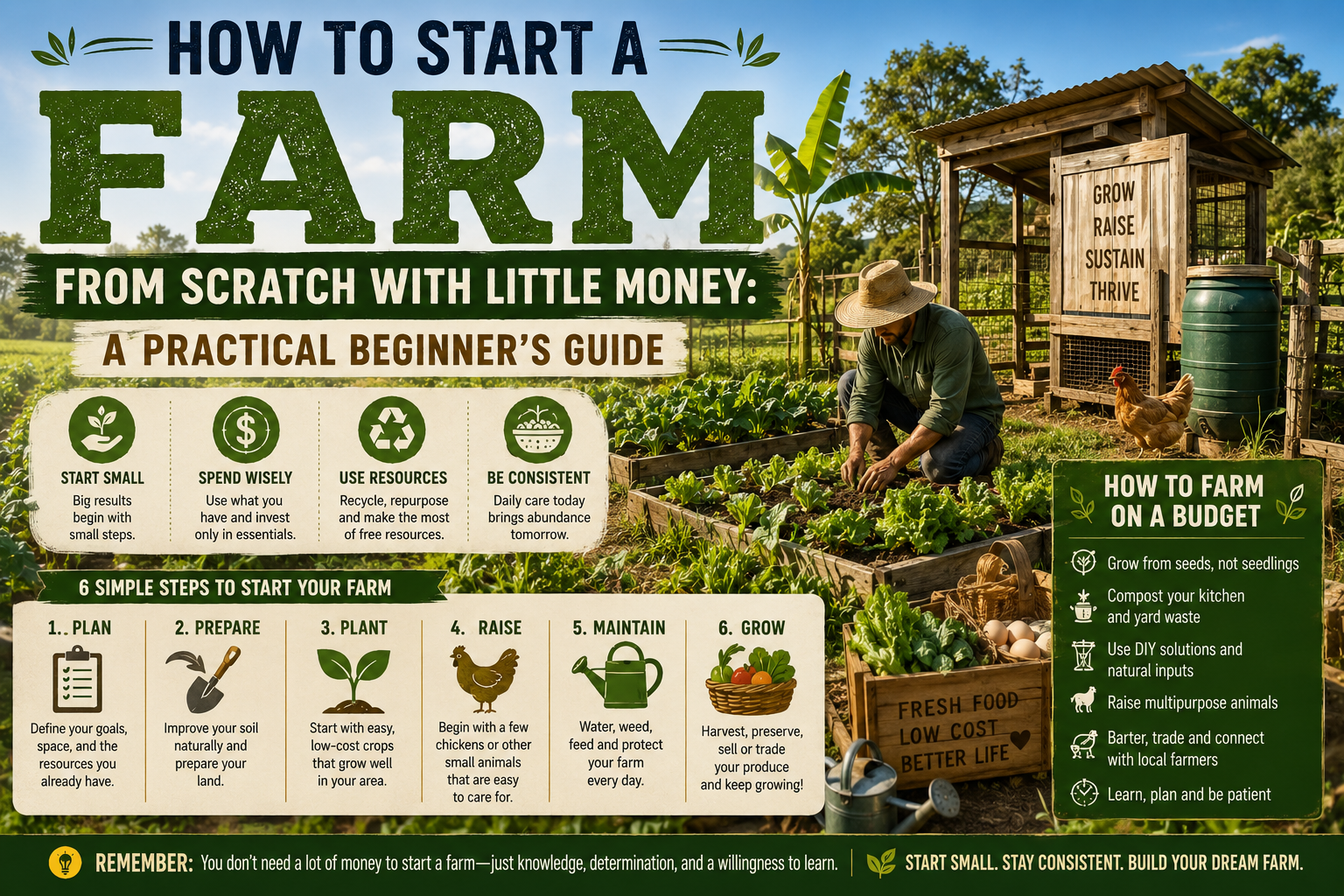
3. Start with Food Production
Food is usually the most obvious place to begin.A productive garden can provide vegetables, herbs, and certain fruits while also giving you practical knowledge about soil, irrigation, pests, and seasonal production.
You don’t need a huge garden.Start with crops that your household actually eats. There is little point growing twenty varieties of vegetables if your family only regularly eats five.Focus on useful crops and learn how to grow them successfully before expanding.
4. Create a Productive Vegetable Garden
A vegetable garden is one of the most practical foundations for a home homestead.You can use traditional garden beds, raised beds, containers, vertical systems, or a combination of approaches. The best method depends on your available space, climate, soil, and budget.Start small enough that you can maintain the garden consistently.
A neglected large garden is much less useful than a small garden that is productive throughout the season.Consider growing a mixture of fast-growing vegetables, herbs, and crops that can provide food over a longer period.
5. Grow Herbs and High-Value Crops
If space is limited, prioritize plants that provide significant value relative to the amount of space they occupy. Herbs are an excellent example.Basil, rosemary, thyme, oregano, mint, parsley, and other herbs can be grown in relatively small spaces depending on the climate and species. You can also grow crops that are expensive to purchase locally or that you use frequently. This approach makes your garden more efficient.Self-sufficiency isn’t about growing everything.It’s about growing the things that make the most sense for you.
6. Plant Fruit Trees Early
Fruit trees require patience.Unlike annual vegetables, you can’t necessarily plant a tree today and expect a large harvest next month.Depending on the species and variety, some trees may take years to reach significant production.
That’s precisely why planting them early can be a smart long-term decision.Choose varieties appropriate for your climate and available space. Think of fruit trees as a long-term investment in the productivity of your property.
7. Learn to Save Seeds
Seed saving can reduce dependence on commercial seed purchases for certain crops.However, not every plant produces seed that will grow true to the parent plant, particularly hybrids.Start with crops that are relatively straightforward to save and store.Proper labeling is essential.Record the variety and year the seed was collected.Over time, you can develop your own small seed collection adapted to your growing conditions.
8. Build a Composting System
One of the most useful principles of a self-sufficient homestead is turning waste into a resource.
Instead of sending all organic material to the garbage, you can compost appropriate materials and return nutrients to the soil.
A basic compost system can use:
- Vegetable scraps.
- Leaves.
- Grass clippings.
- Plant residues.
- Other suitable organic materials.
The goal is to create a balanced composting process rather than simply throwing everything into a pile.A good compost system can reduce household waste while producing a valuable soil amendment.
9. Use Mulch to Reduce Water Consumption
Water management is essential for a productive homestead. Mulching around plants can help protect the soil surface, reduce evaporation, and suppress certain weeds. Depending on your system, you may use materials such as:
- Dry leaves.
- Straw.
- Wood chips.
- Grass clippings that are appropriate for the application.
Mulch also contributes organic matter as it breaks down.It’s one of the simplest examples of a low-cost technique that can improve the efficiency of a garden.
10. Develop a Water Strategy
A self-sufficient homestead needs a reliable water strategy.Start by identifying how much water your household and garden actually use. Then look for ways to reduce unnecessary consumption.Rainwater collection can potentially provide water for certain non-potable uses, depending on local laws and system design.Storage tanks, rain barrels, gutters, and irrigation systems can help capture and distribute water.
However, don’t assume collected rainwater is automatically safe to drink. Potable-water systems require appropriate treatment and infrastructure.Always check local regulations before installing or using a rainwater system.
11. Use Drip Irrigation
If you’re growing food, efficient irrigation can make a significant difference.Drip irrigation delivers water close to the root zone rather than spraying the entire area.This can reduce unnecessary water loss and make irrigation more consistent.
A simple system can be installed using tubing, emitters, connectors, and a suitable water source.You don’t necessarily need an expensive automated system.Start with a simple layout and improve it as your garden expands.
12. Consider Raising Chickens
For households with sufficient space and local permission, chickens can be a useful addition.They can provide eggs, manure for composting systems when handled appropriately, and companionship.But chickens aren’t free food machines.
They need:
- Secure housing.
- Clean water.
- Appropriate feed.
- Protection from predators.
- Regular care.
- Adequate space.
Before getting chickens, research local regulations and understand the actual cost of keeping them.Start with a manageable number rather than building a large flock immediately.
13. Consider Other Small Livestock Carefully
Depending on your property, climate, goals, and regulations, you might eventually consider other animals.Rabbits, ducks, goats, or bees can be part of certain homesteading systems.However, every additional species increases complexity.
Different animals require different housing, nutrition, fencing, health management, and daily routines.Don’t add livestock simply because another homesteader has it.Ask whether the animal actually contributes something valuable to your system.
14. Integrate Animals into the Homestead System
One of the most interesting aspects of homesteading is creating connections between different systems.For example, manure from appropriate livestock can become part of a composting system.Garden residues can potentially contribute to certain animal-feeding systems when they are safe and appropriate.Crops can provide food.Compost can improve soil.
The objective is to reduce waste by creating useful cycles.However, these systems need to be managed correctly. Not every animal should eat every plant, and animal manure should be handled appropriately before being used around food crops.
15. Preserve Food Instead of Wasting It
Growing food is only part of self-sufficiency.If you produce more food than you can eat immediately, learning preservation techniques can extend its usefulness.Depending on the food and method, you can consider:
- Freezing.
- Drying.
- Dehydrating.
- Fermenting.
- Pickling.
- Canning using tested, food-safe methods.
Food preservation requires proper technique.Improvising with preservation methods can create serious food-safety risks.Learn the correct method for each food rather than assuming that one preservation technique works for everything.
Would you like to be part of our weekly newsletter? At HomeToolsStavk, we analyze businesses built from scratch, starting with simple tools and equipment and growing into profitable ventures. Discover what you need to get started, how to scale, and whether the idea is really worth pursuing.

16. Build a Small Pantry
A pantry can increase household resilience.Instead of purchasing food only when you need it, you can maintain a rotating supply of shelf-stable foods.
Examples may include:
- Rice.
- Beans.
- Pasta.
- Flour.
- Oats.
- Canned foods.
- Spices.
- Cooking ingredients.
Use the principle of first in, first out. Consume older products first and replace them with newer purchases. This prevents food from quietly turning into an archaeological project at the back of the pantry.
17. Learn Basic DIY Skills
A self-sufficient homestead isn’t just about food.It is also about skills. Learning basic carpentry, plumbing maintenance, gardening, tool use, repairs, and construction can make you more independent.
You don’t need to become an expert in everything. Start with simple projects.Build a planter.Repair a fence. Construct a compost bin.Install shelving.Build a workbench. These projects gradually teach you how materials, measurements, fasteners, and tools work.
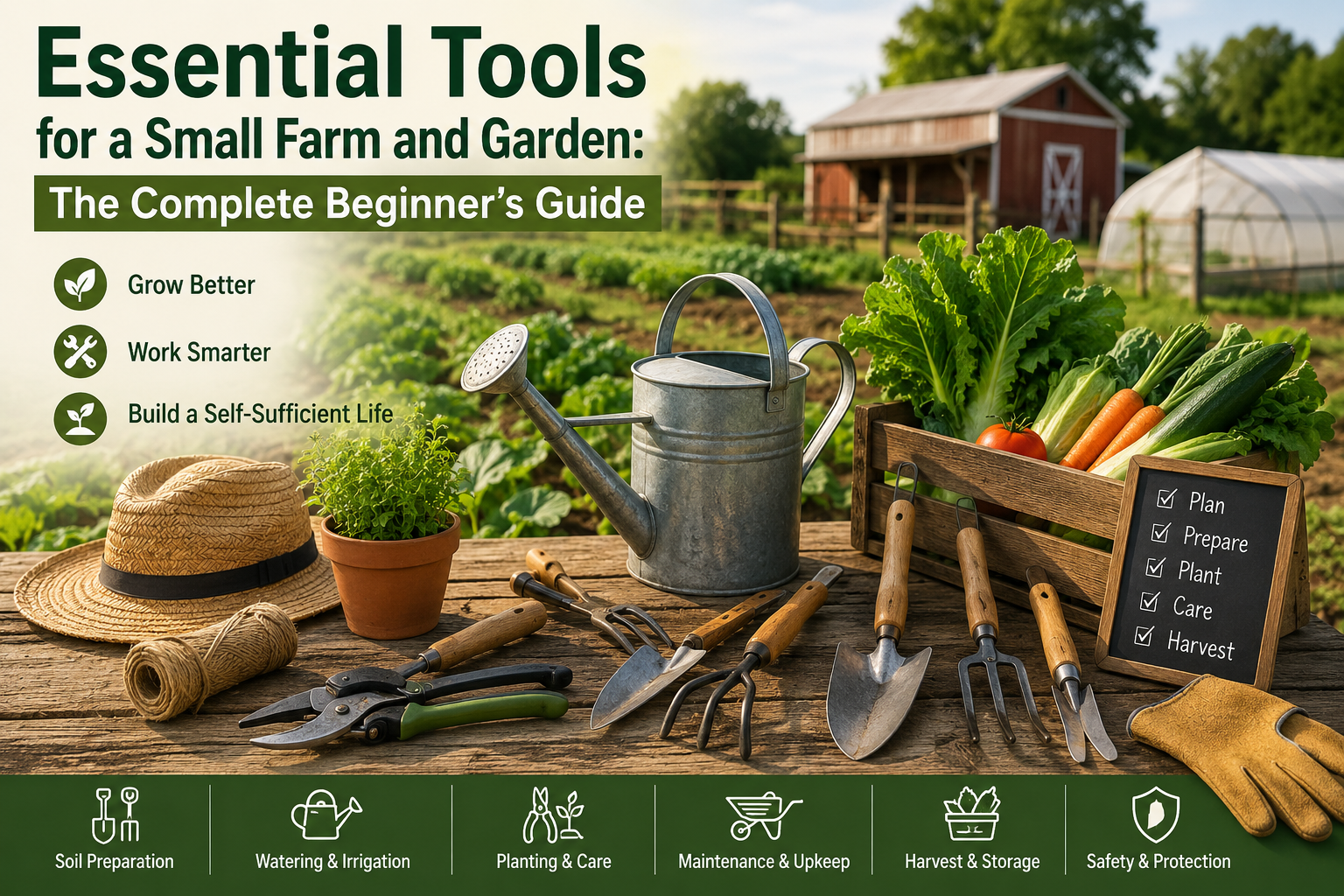
18. Build a Basic Homestead Tool Kit
A basic toolkit might include:
- Hammer.
- Screwdrivers.
- Pliers.
- Adjustable wrench.
- Tape measure.
- Level.
- Utility knife.
- Hand saw.
- Drill.
- Drill bits.
- Shovel.
- Rake.
- Hoe.
- Pruning shears.
- Wheelbarrow.
You don’t need to purchase everything immediately.Build your collection according to the projects you actually undertake.Used tools can also be a good option when they’re in safe working condition.
19. Reduce Household Energy Consumption
Self-sufficiency doesn’t always mean producing more energy. Sometimes the cheapest energy is simply the energy you don’t use.Start by reducing unnecessary consumption. Improve insulation where appropriate.Use efficient lighting.
Maintain appliances.Reduce unnecessary heating and cooling.Improve ventilation.Only after reducing waste should you consider larger investments such as solar power. This approach can make renewable energy systems more economically sensible.
20. Consider Solar Power Carefully
Solar panels can be useful for increasing household energy independence, but they’re not automatically the best first investment.A complete solar system can include panels, inverters, batteries, wiring, mounting equipment, maintenance, and professional installation.Before purchasing anything, calculate your actual electricity consumption.
Determine which loads are essential and how much energy you would need to replace.A small solar system might make sense for specific applications such as lighting, charging devices, or powering certain equipment.A whole-house system is a much larger project.
21. Create an Emergency Water and Food Reserve
Self-sufficiency also means resilience.Unexpected events can interrupt electricity, water supplies, transportation, or food availability. Maintaining an appropriate reserve of water and shelf-stable food can provide additional security.
Your reserve should be based on your household size, climate, available storage, and realistic needs.Rotate stored products regularly rather than allowing them to expire. A practical emergency reserve is much more useful than a huge stockpile of food nobody wants to eat.
22. Learn Basic Repairs
A homestead contains many things that eventually need repair.Doors, fences, irrigation systems, furniture, tools, storage containers, and garden structures can all wear out. Learning basic repair skills can reduce costs and extend the useful life of your equipment. Before replacing something, ask whether it can be repaired safely. Sometimes a five-dollar replacement part can save you from purchasing an entirely new product.
23. Don’t Try to Become Completely Self-Sufficient
This is one of the most important points.Complete self-sufficiency sounds attractive, but it can become an unrealistic obsession.Modern households depend on many systems that are extremely difficult to reproduce independently.
Medical care, internet infrastructure, advanced tools, specialized materials, transportation, and countless other services come from outside the homestead. There’s nothing wrong with that. The goal should be greater resilience, not isolation.A homestead can produce food and resources while still benefiting from modern society.
24. Build the Homestead in Phases
Trying to build everything simultaneously is one of the fastest ways to become overwhelmed.
A better strategy is to divide your project into phases.
Phase 1: Food
Start a vegetable garden and plant herbs.
Phase 2: Soil
Establish composting and mulching systems.
Phase 3: Water
Improve irrigation and consider appropriate water storage.
Phase 4: Perennial Production
Plant fruit trees and other long-term crops.
Phase 5: Livestock
Consider chickens or other appropriate animals.
Phase 6: Energy
Reduce consumption and investigate renewable energy options.
Phase 7: Expansion
Add new systems only when the existing ones are working reliably.This approach makes the project much easier to manage.
How Much Space Do You Need for a Self-Sufficient Homestead?
There is no universal answer.A small backyard can support herbs, vegetables, containers, composting, and perhaps some fruit production.A larger property can support orchards, livestock, larger gardens, water systems, and additional infrastructure.
However, space isn’t the only limiting factor.Time, water, soil quality, climate, money, and labor can be equally important.A productive quarter-acre can be more useful than several acres that nobody has the time to maintain
The Most Common Mistakes Beginners Make
New homesteaders often make similar mistakes.They buy too many animals.They plant too much.They purchase expensive equipment too early.They underestimate water requirements.They build structures without planning.
They fail to track expenses.They try to copy someone else’s homestead exactly.And perhaps the biggest mistake is trying to accomplish everything during the first year. Don’t confuse enthusiasm with capacity.A homestead should grow at a speed you can actually sustain.
A Simple First-Year Homestead Plan
If you’re starting from scratch, your first year could look something like this.
Months 1–2: Planning
Evaluate your property, sunlight, water, soil, budget, and available time.
Months 3–4: Garden
Prepare a small growing area and plant crops appropriate for your climate.
Months 4–6: Compost
Start a compost system and begin recycling appropriate organic materials.
Months 5–8: Infrastructure
Improve irrigation, storage, pathways, fencing, and other basic systems.
Months 6–12: Perennials
Plant fruit trees, herbs, and other long-term crops where appropriate.
End of Year: Evaluate
Calculate what you produced, what you spent, what worked, and what needs improvement.
Then plan your second year.
How to Measure Your Progress
Don’t measure success only by how much food you produce. Track several indicators.For example:
Food production: How much food did you grow?
Expenses: How much money did you spend?
Waste: How much organic waste did you reuse?
Water: How efficiently did you use water?
Skills: What new skills did you learn?
Time: How many hours does the system require?
Resilience: How much more independent is your household?
These measurements provide a much more realistic picture of whether your homestead is improving.
The Real Goal of a Self-Sufficient Homestead
The ultimate goal isn’t to create a property that produces absolutely everything you need. It’s to create a household that can produce more, waste less, adapt better, and depend less on fragile external systems.A productive garden can reduce grocery expenses. A compost system can reduce organic waste.Fruit trees can provide food for years.
A small flock of chickens can provide eggs. Water storage can provide additional resilience. DIY skills can reduce repair costs.Energy efficiency can reduce utility bills.None of these systems needs to be perfect. Together, however, they can transform the way a household interacts with its resources.
Conclusion: Build Independence One System at a Time
Learning how to create a self-sufficient homestead at home isn’t about escaping modern life.It’s about becoming more capable within it.You don’t need hundreds of acres or a huge budget. You can start with a small vegetable garden, a compost bin, a few fruit trees, and a basic collection of tools.Then improve your water management.
Learn to preserve food. Develop DIY skills.Consider small livestock when appropriate.Reduce energy consumption.Build storage and emergency reserves.Most importantly, don’t try to do everything at once.A successful homestead is not built in a weekend. It’s developed through dozens of small improvements made consistently over months and years.
Start with the system that provides the greatest benefit.Make it work. Learn from it.Then build the next one.That’s how a backyard gradually becomes a productive, resilient, and increasingly self-sufficient homestead.



Leave a Reply